
Principle and application
Direct Push investigates soil and groundwater by driving the rod straight into the ground, with no fluid circulation, and recovering the sample in a disposable liner. It is a fast, clean method that allows many points per day with low waste generation, suited to environmental investigation and to delimiting contamination.
Typical applications: environmental liabilities, fuel stations, industry, due diligence and remediation.
The test in stages
Direct driving
The rod is driven by percussion or pressure, with no fluid circulation.
Collection in the liner
Soil and water enter a disposable liner, preserving the sample.
Sealing and labelling
Each liner is sealed and traced by point and depth.
Low waste
With no drilling mud, there is less investigation waste to dispose of.
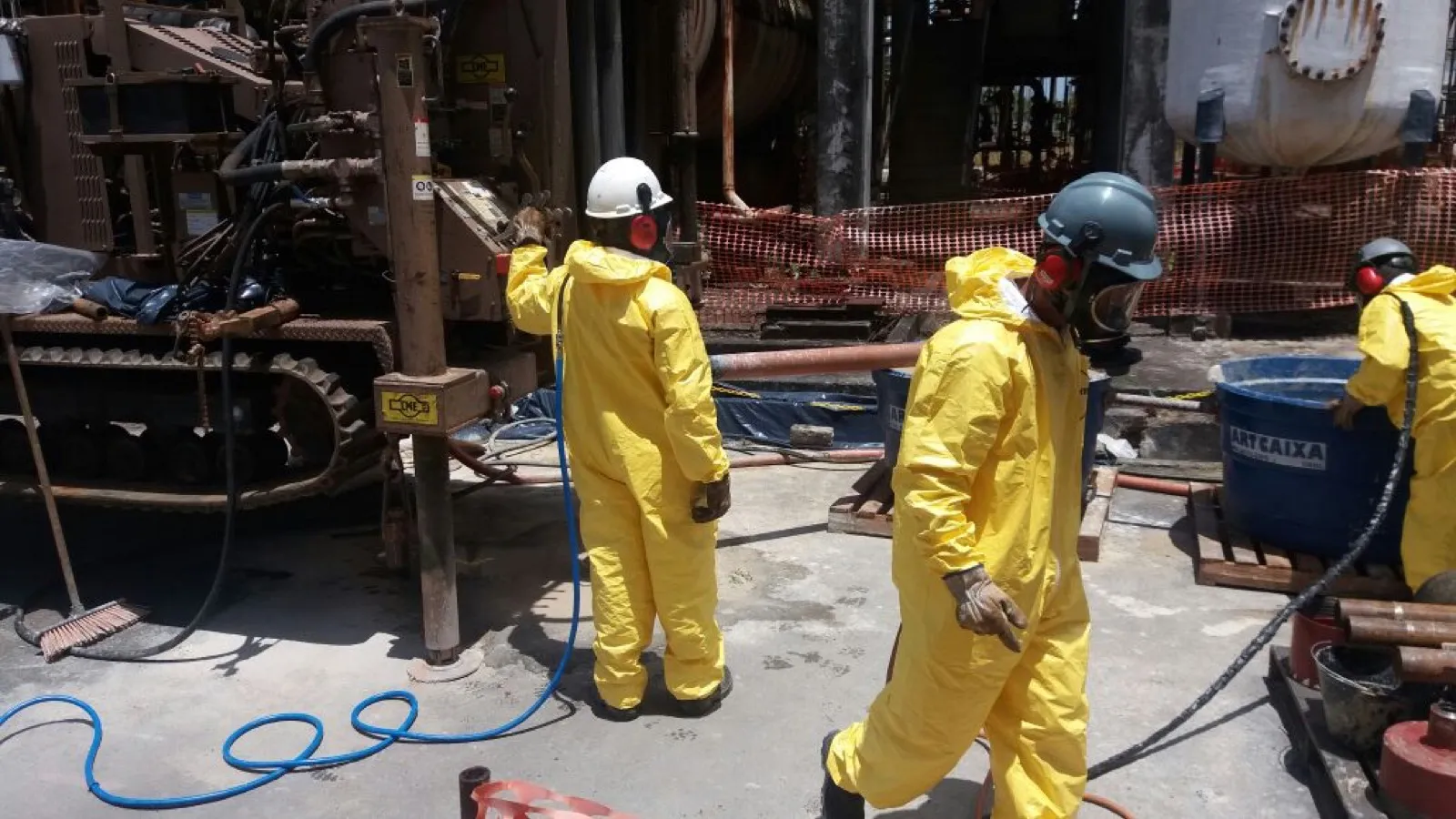
Quality controls: disposable liners per point, with no cross-contamination, decontamination of rods between boreholes, strict chain of custody for the samples and standardised field record.
With a disposable liner
| Soil profile | Continuous sample in a liner |
|---|---|
| Pore water | Collected for chemical analysis |
| Depth | Definition of the contaminated target |
| Density | Many points in little time |
| Samples | Soil and water labelled by point and elevation |
| Profile | Description of the recovered material |
| Location plan | Grid of investigated points |
| Typical lead time | High daily throughput of points |
Performed to the same QA/QC, safety and site standard as every Damasco Penna service, described in Quality and field operations.
Frequently asked questions about Direct Push sampling
What is direct push sampling used for?
Direct Push investigates soil and groundwater by driving the rod straight into the ground, with no fluid circulation, and recovering the sample in a disposable liner. It is a fast, clean method that allows many points per day with low waste generation, suited to environmental investigation and to delimiting contamination.
What is the advantage of Direct Push?
Speed and cleanliness: many points are driven per day, with an intact sample in a liner and without generating drilling mud, reducing the investigation waste to be disposed of.
Does Direct Push work for both soil and water?
Yes. The method collects both the soil profile and the pore water, allowing the contamination to be characterised at depth.
Related services
Direct Push sampling for your project
Tell us the project context, we will put together the investigation plan and the quote.