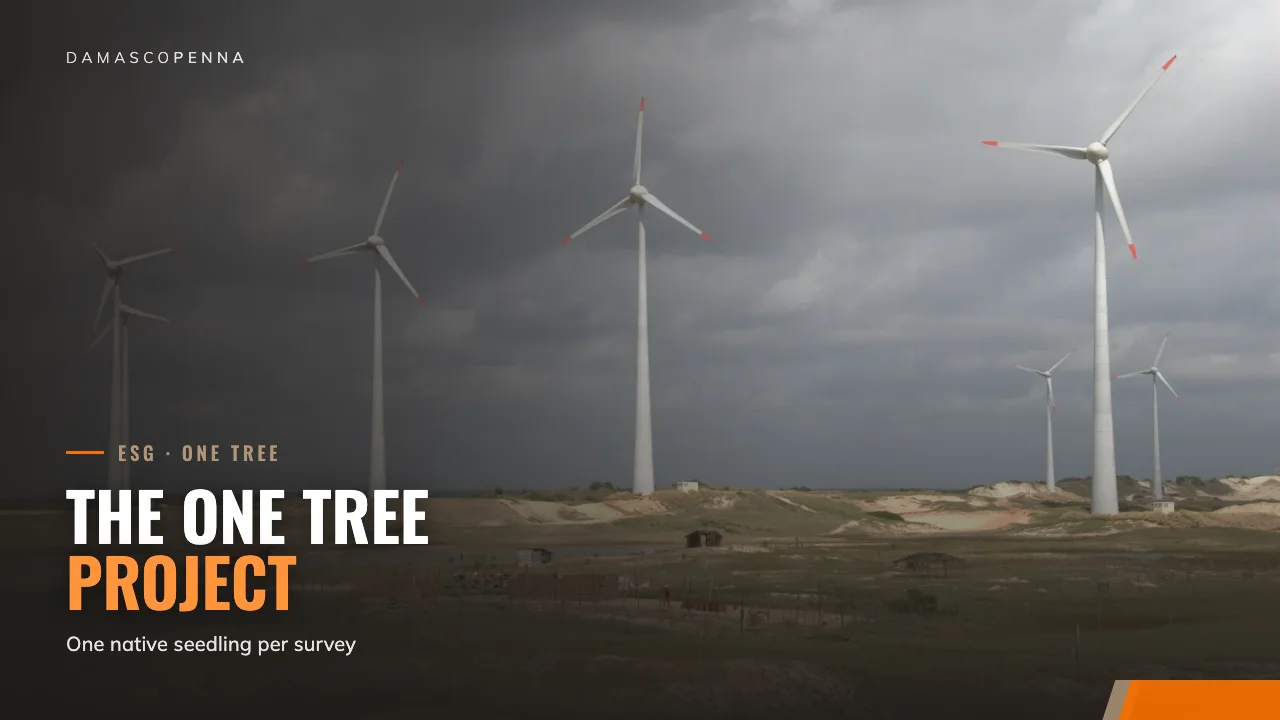
Responsibility towards the environment and people is part of our work, from planning investigations to carrying them out in the field. At Damasco Penna, this commitment takes shape through waste management, the restoration of natural areas, support for our people and ethical standards in our relationships with clients, suppliers and partners.
The One Tree programme
One borehole or test completed, one native tree seedling planted.
Since 2020, the One Tree programme has linked our field activities to the planting of species native to the Atlantic Forest. In partnership with organisations dedicated to restoring natural springs, we contribute to restoring vegetation and protecting water resources.
The programme creates a direct link between our work and our contribution to environmental restoration: each new investigation means one more seedling planted.
Partnerships for the Atlantic Forest
The Atlantic Forest is the biome in which Damasco Penna is based. Protecting its vegetation helps conserve natural springs, preserve biodiversity and safeguard water resources.
The One Tree programme supports this work through partnerships with organisations involved in restoring and conserving the biome:
- Copaíba: planting native seedlings and restoring natural springs in the Socorro region of São Paulo state.
- Zandoná Conservação: restoring areas of Atlantic Forest in the Serra da Cantareira, São Paulo, through the planting of native orchids.
Environmental management
Environmental care is part of how we deliver our services. Our environmental management system, certified to ISO 14001, guides waste control and field procedures:
- Waste separation and appropriate disposal of waste generated by our operations.
- Procedures for preventing and responding to environmental emergencies.
- Use of methods that generate little waste, such as Direct Push.
We also carry out environmental site investigations that provide technical information for the management of contaminated sites.
Ethics and governance
Our Code of Ethics and Conduct guides our decisions and relationships with employees, clients, suppliers and partners. Its principles provide a shared basis for responsible conduct throughout the company.
We maintain a confidential reporting channel where situations and conduct that conflict with these principles can be reported.
Inclusion and diversity
Our team brings together people with different experiences, knowledge and backgrounds. This diversity strengthens our ability to understand problems and find solutions.
We are committed to providing equal opportunities, recognising each person's contribution and combating discrimination. We seek to create an environment where everyone is respected and has the opportunity to learn, grow and share in the company's achievements.
Sustainability guidelines
Our commitment to sustainability is formalised in the Sustainability Management Procedure (PR-7). Its guidelines inform the company's activities, with targets assessed through the Integrated Management System (IMS).
Our priorities include:
- Incorporating environmental, social and governance criteria into decisions and operations.
- Reducing carbon emissions.
- Applying sustainability criteria to purchasing and contracting.
- Promoting diversity and combating discrimination.
- Supporting employees' emotional health and well-being.
- Contributing to society through our activities and partnerships.
Responsible procurement
We follow the guidelines of ISO 20400, the guidance standard for sustainable procurement, in our purchasing and contracting. We consider sustainability criteria and suppliers' social and environmental performance in our business relationships.
This approach is part of our commitment to a more responsible supply chain.