
Principle and application
The water pressure test (Lugeon) measures the permeability of a rock mass by injecting water under pressure into a borehole section isolated by packers. The flow absorbed at each pressure stage, normalised to 10 kgf/cm², gives the Lugeon value, which indicates how watertight the rock is and where grouting treatment is required.
Typical applications: dams, hydropower plants, tunnels, mining and rock foundations.
The test in stages
Isolating the section
Packers isolate the borehole section to be tested, above and below.
Injection under pressure
Water is injected in increasing and decreasing pressure stages, each held for a fixed time.
Flow measurement
The flow absorbed at each pressure stage is recorded.
Calculating the Lugeon value
The water loss is normalised to the reference pressure of 10 kgf/cm², giving the Lugeon value of the section.
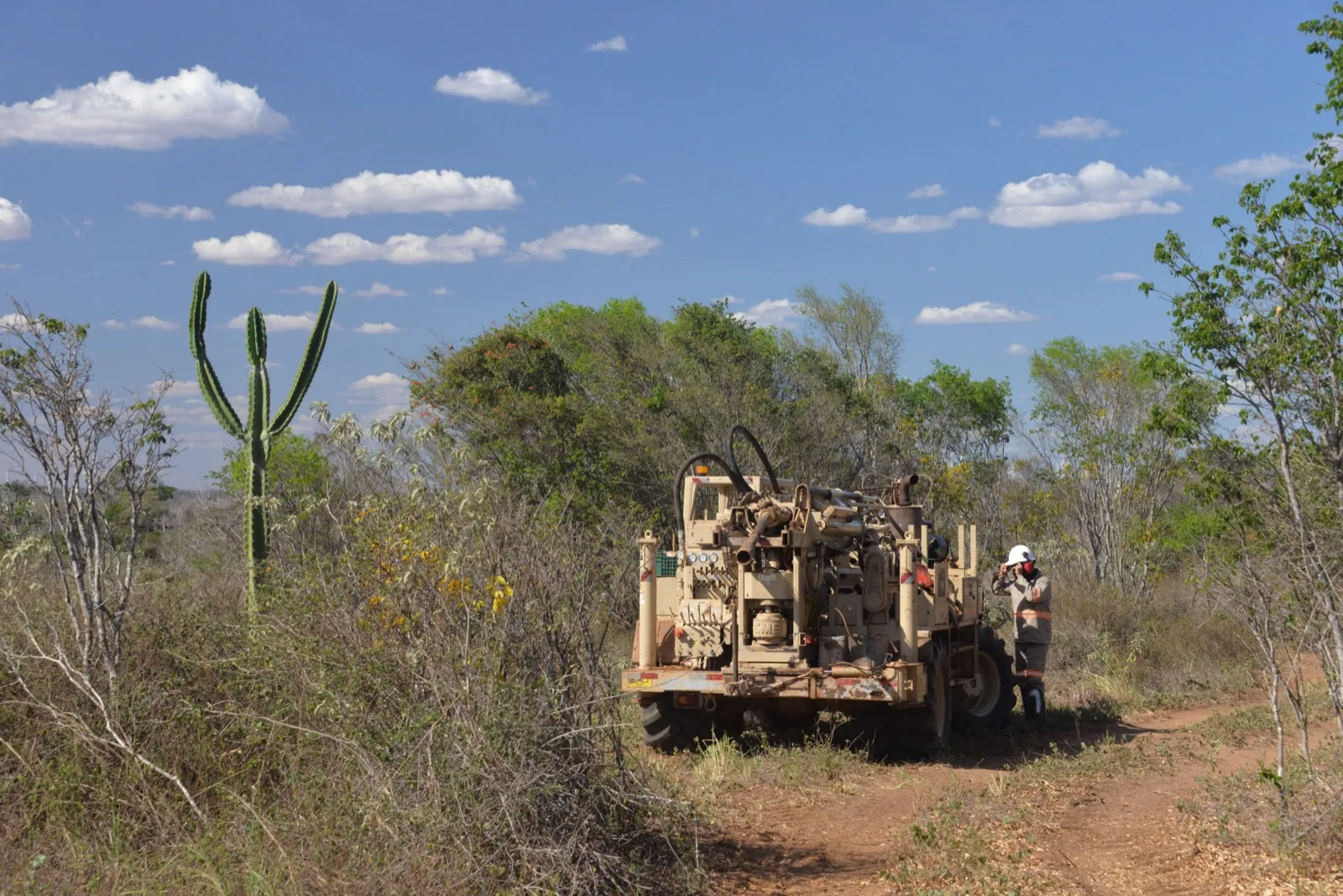
Quality controls: packers and pressure gauges checked every campaign, pressure stages recorded with controlled time and flow, test in line with ABGE good practice and ISRM references and interpretation by an engineer, with a pressure-flow curve.
What the test measures
| Lugeon unit | 1 litre/min per metre of section, under 10 kgf/cm² |
|---|---|
| Permeability | Estimate of the rock mass coefficient k (≈ 1 UL ≈ 1×10⁻⁷ m/s) |
| Flow per section | Water absorption at each pressure stage |
| Behaviour | Flow pattern: laminar, turbulent, dilation or clogging |
| Test report | Lugeon value per section tested, with a pressure-flow curve |
| Permeability profile | Distribution of absorption along the borehole |
| Recommendation | Identification of sections that require grouting treatment |
| Typical lead time | According to depth and number of sections |
Performed to the same QA/QC, safety and site standard as every Damasco Penna service, described in Quality and field operations.
Frequently asked questions
What is the Lugeon test used for?
The water pressure test (Lugeon) measures the permeability of a rock mass by injecting water under pressure into a borehole section isolated by packers. The flow absorbed at each pressure stage, normalised to 10 kgf/cm², gives the Lugeon value, which indicates how watertight the rock is and where grouting treatment is required.
What is the Lugeon unit?
It is the loss of one litre of water per minute, per metre of section tested, under a pressure of 10 kgf/cm². A low value indicates a watertight rock mass; high values point to fractured or permeable rock, which may require grouting.
Are the Lugeon test and the infiltration test the same thing?
No. The infiltration test measures absorption in soil, usually without controlled pressure. The Lugeon test is run in rock, with the section isolated by packers and water pressure controlled in stages, and it is the standard for assessing seepage in rock masses.
Related services
This service for your project
Tell us about your project and we will prepare the investigation plan and the quote.