
1. How the system works
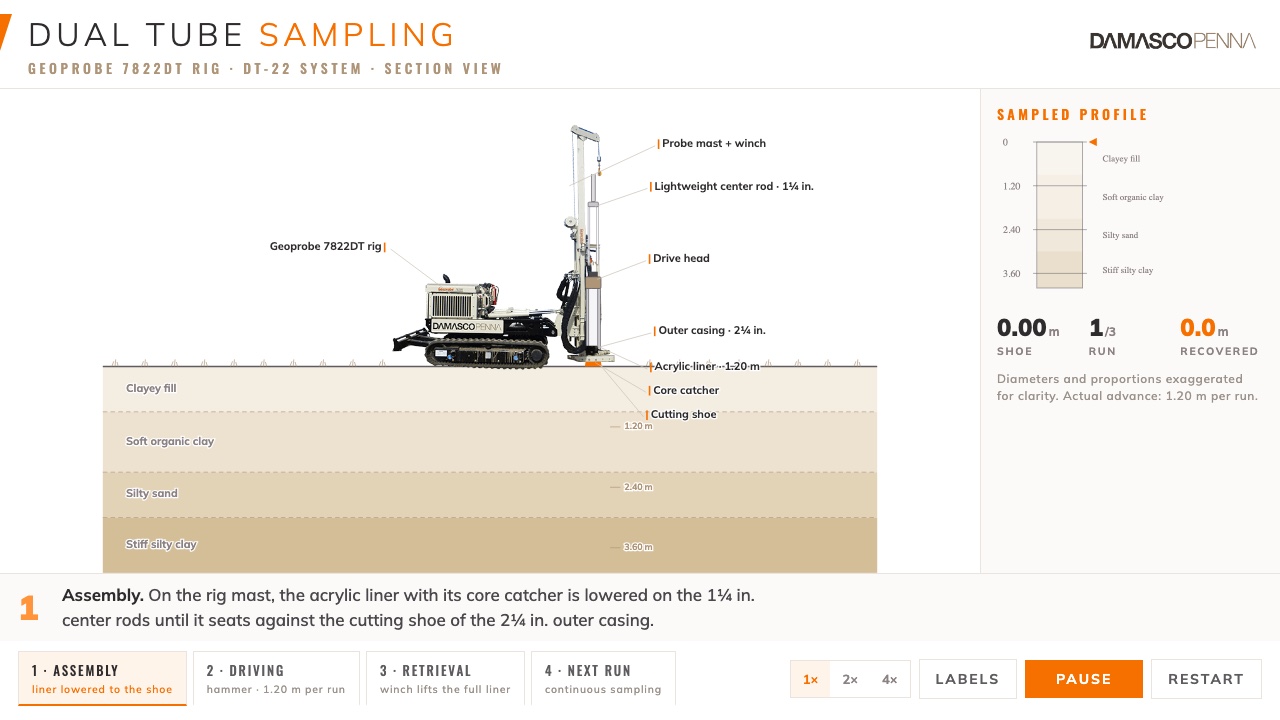
The string advances by direct push, pressed and percussed from the top, with no rotary cutting and no drilling fluid. The outer tube works as continuous casing: it goes in with the drive and stays in the hole from the first to the last advance. The inner tube runs inside it, carrying a disposable acrylic liner.
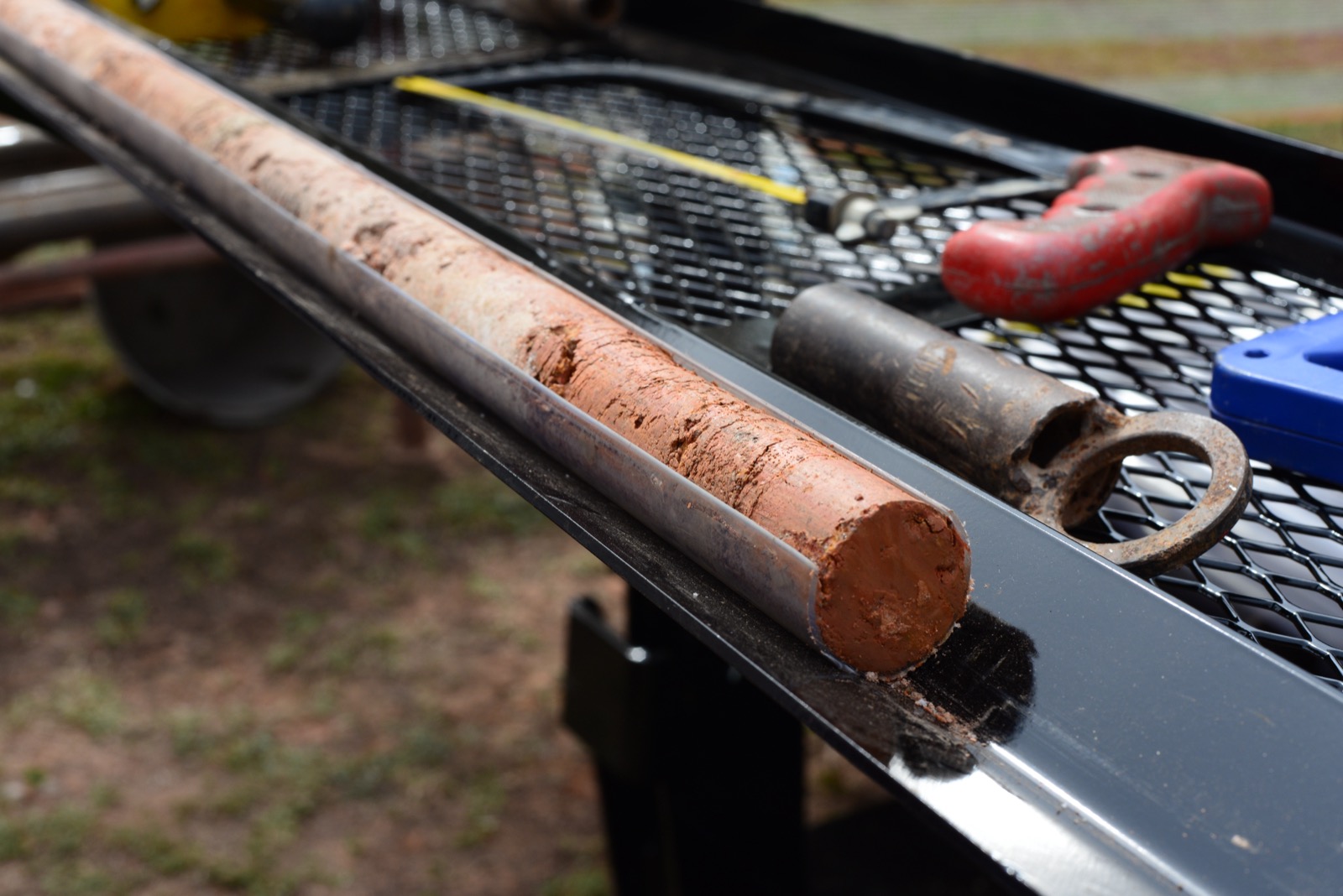
At each advance, the liner comes up to the surface with the continuous sample of the driven interval and a new liner goes down for the next run. Because the material enters the liner directly and comes up sealed, it never touches the borehole walls or tooling already in use, which preserves the chemical integrity of the sample, including volatile compounds, and supports the chain of custody.
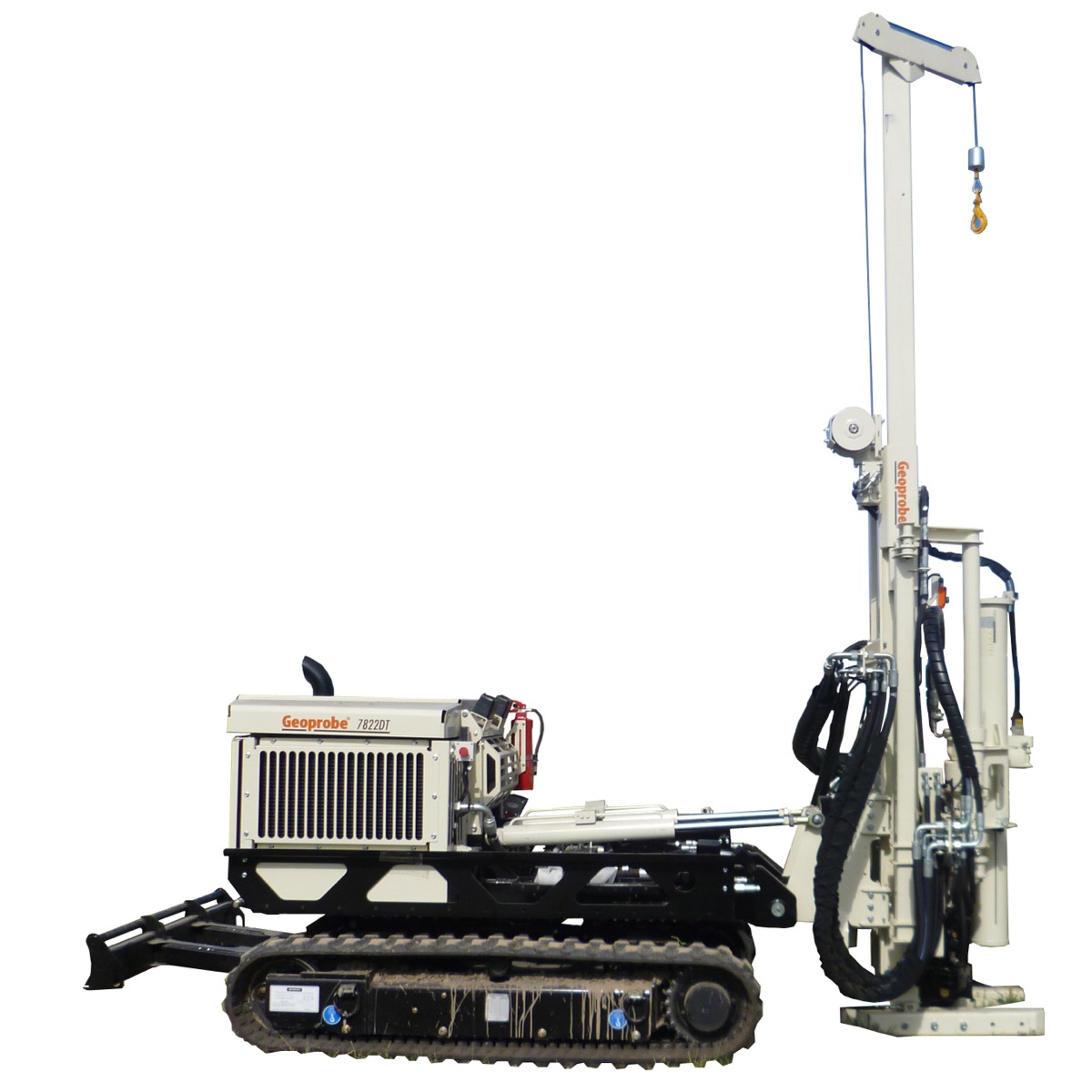
The animation below reproduces the DT-22 cycle: assembly of the two strings, driving with the hammer, recovery of the liner with the sample and the next advance with the hole already cased.
2. Why continuous casing matters
On a contaminated site, the greater risk is the hole itself becoming a preferential pathway between layers: an open hole can drag contaminant from a shallow zone, or from a perched water lens, down into a deeper aquifer, creating contamination that did not exist before. In the dual tube system, the outer tube isolates the borehole walls throughout the entire operation, and each sample represents only the interval in which it was driven.
Because the sample does not travel with fluid, there is no cross-contamination between depths and no dilution of what goes to the laboratory. The system samples continuously above and below the water table, and the casing prevents the walls from collapsing in soft or saturated soils.
3. Direct comparison
| Criterion | Dual tube | Hollow stem auger with liner | Conventional |
|---|---|---|---|
| Continuous casing | Yes, by the outer tube, from the first to the last advance | Yes, by the auger string | No, or only as a separate stage |
| Cross-contamination | Minimal risk: cased hole and sample isolated in the liner | Low risk, with attention to auger cleaning | Significant risk between layers |
| Chemical integrity | Sample sealed in the liner, suitable for volatiles | Good, with sealing at the surface | Subject to loss of volatiles and mixing |
| Above and below the water table | Continuous sampling; casing prevents collapse | Good above the water table; below it demands care | Limited below the water table |
4. Where dual tube is the choice
The system is indicated whenever sample integrity and hole isolation are critical:
- Contamination profiles. Continuous sampling to delineate the vertical distribution of contaminants.
- Confirmatory investigation. Verification of results from earlier phases with controlled integrity.
- Sampling at a defined depth. Sample sealed from driving to the laboratory, at the exact depth of interest.
- Soft and saturated soils. The casing keeps the hole from closing and keeps the sample representative.
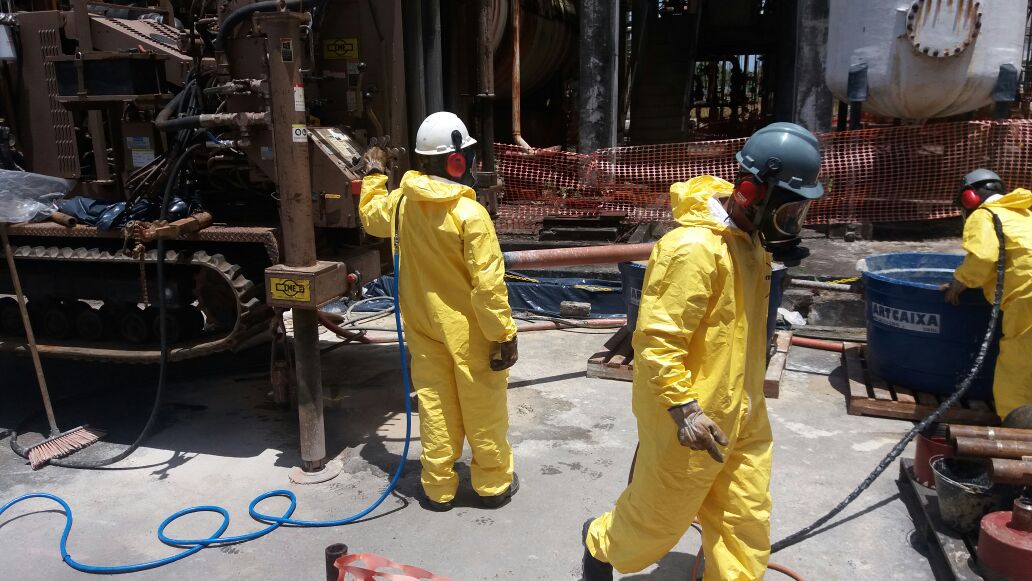
Damasco Penna runs the Geoprobe dual tube system (DT-22) in its environmental campaigns, following ASTM D6282 for direct push sampling. Sample diameters and liner lengths vary with the configuration of the equipment and are defined in the investigation plan.
5. Conclusion
Dual tube brings together, in a single direct push system, continuous casing of the hole and a continuous sample sealed in a liner. For contaminated land investigation, that means reliable chemical data, a traceable chain of custody and a hole that does not create a contamination pathway: it is the reference method at Damasco Penna for soil sampling in environmental borings.