
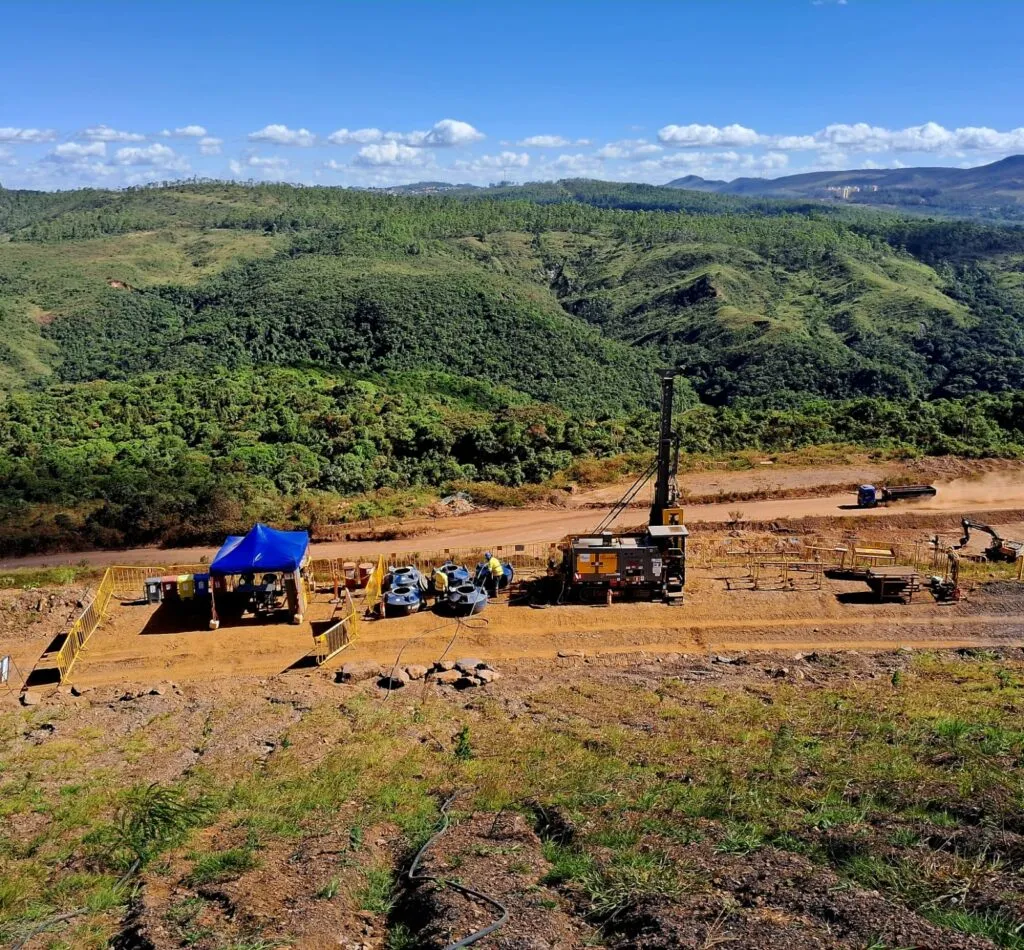
1. From the rig sensor to the office
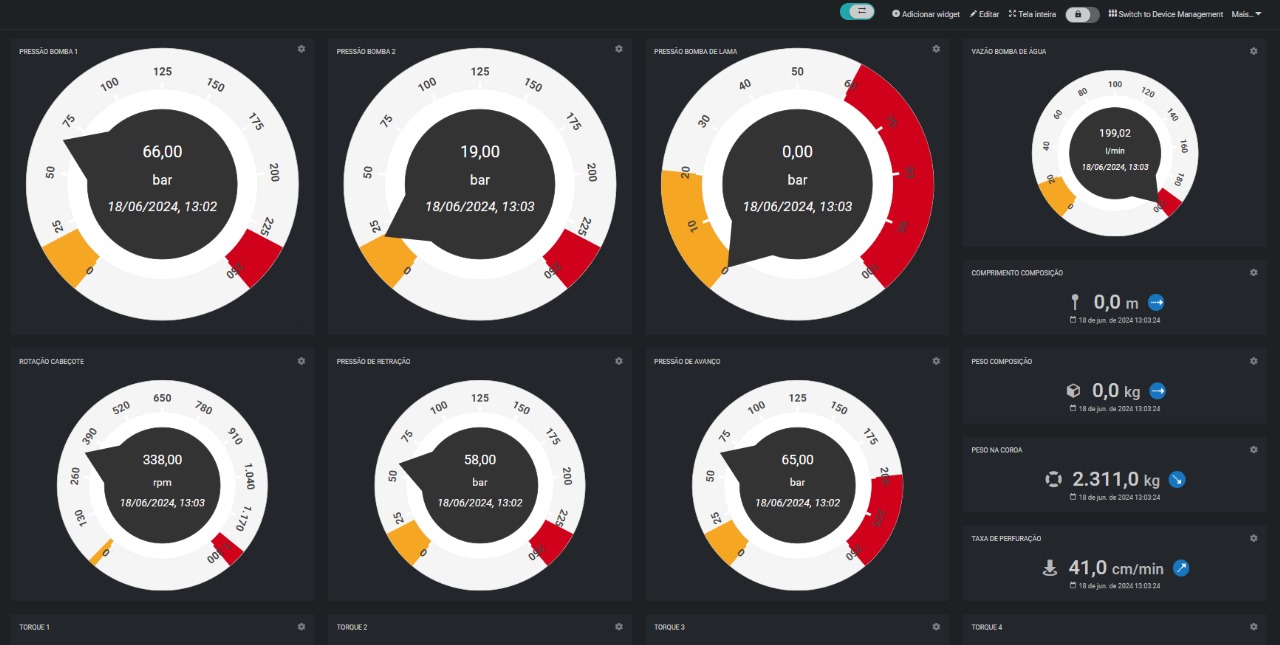
The system on board the rig records and transmits, in near real time, the drilling and operating parameters: head rotation, pump pressures, advance and retraction, water flow, penetration rate, weight on bit, hour meter, machine status, location and the times the equipment is switched on and off. Each gauge on the dashboard corresponds to a sensor, updated with date and time, and the office begins to follow the operation while it happens.
2. The parameters are read together
No single signal decides on its own. It is the combined reading that informs: rotation and feed pressure show how the tool attacks the rock; flow and pump pressure tell whether the hole is clean and the bit cooled; the penetration rate translates the result. Cross-referenced with each other and with the drilling tools in use (bit type, diameter, core barrel), these parameters point to the best way to drill each material: where to ease the advance, when to raise the rotation, which bit performs better in a given formation. That is how telemetry becomes drilling knowledge, and not just a record.
With a history by formation, the operation stops repeating the same settings in different rocks: each material comes to have the combination of rotation, pressure, flow and tooling that performs best.
3. Tools stuck in the hole: a safety matter
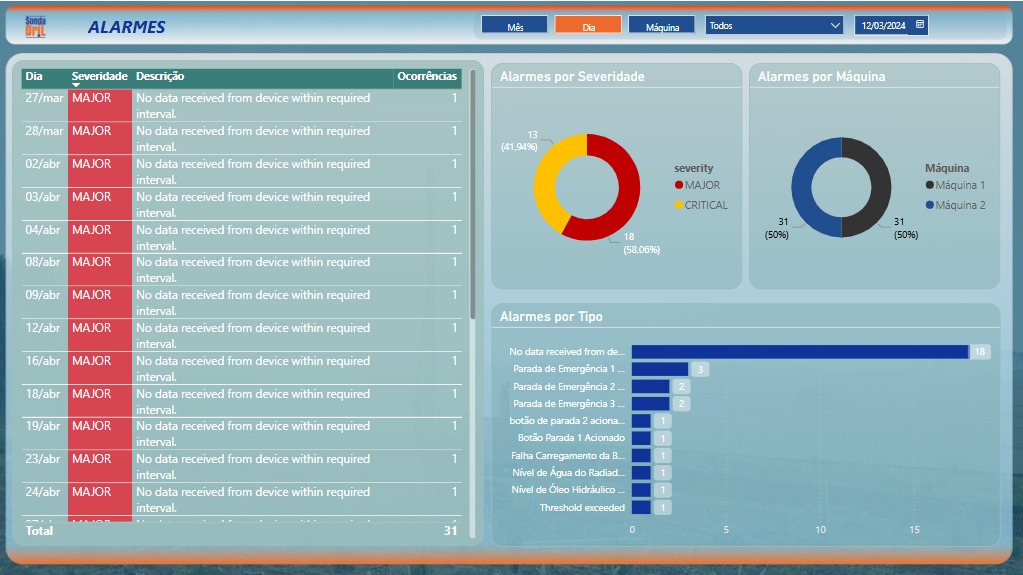
A tool stuck in the hole is often the most critical event in drilling: it calls for freeing maneuvers under load, with the string in tension, and that is where the greatest risks to the crew are concentrated. Being able to monitor why the tool jammed (a drop in rotation, a pressure spike, loss of circulation, a stop alarm) changes the response: instead of reacting on the spot, the crew understands the cause and acts with method, which directly improves health and safety on the pad. The alarm dashboard records every emergency stop and every anomaly, with day and severity.
4. From data to better production
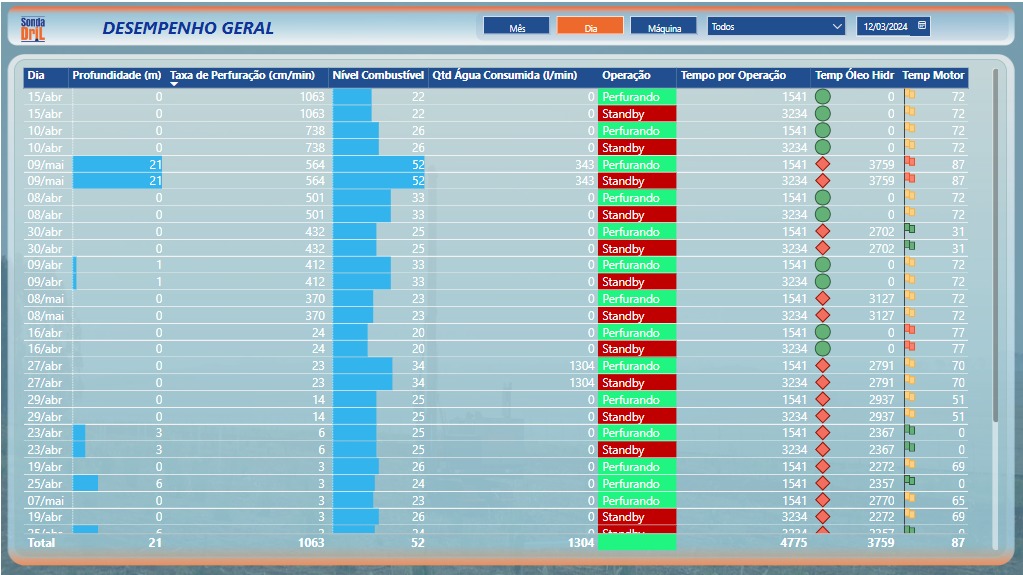
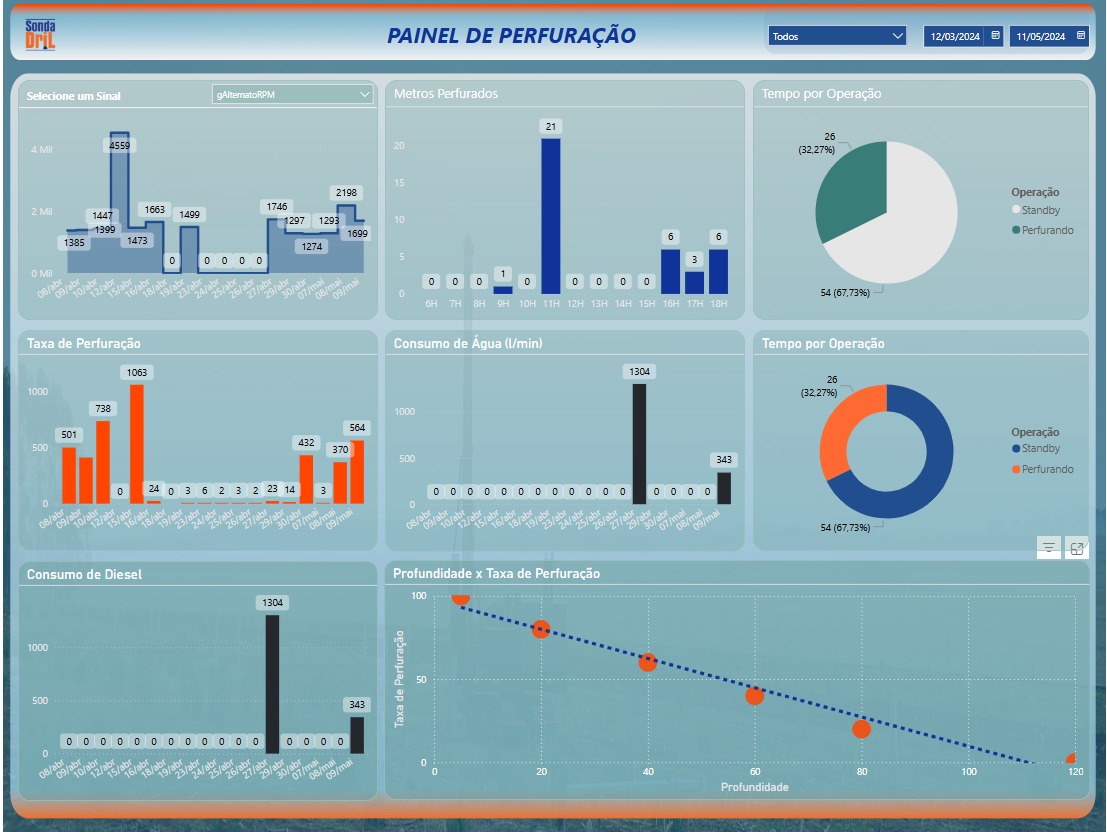
Consolidated by day and by machine, the parameters show the real performance of the rig: meters per hour, penetration rate by depth, consumption and time drilling against time waiting. It is this view that reveals where time is lost and which settings deliver more in each interval.
5. Innovation applied to drilling
Bringing sensor, transmission and dashboard into a mineral exploration rig is innovation with practical effect: the drilling decision no longer rests only on the operator's feel and comes to rest on measured data. Damasco Penna treats monitoring as part of the drilling method, a way to drill each formation with more judgment, more safety and less unplanned downtime.
The SondaDril SDH 700 rig, part of the Damasco Penna fleet, comes from the factory with the telemetry system on board. The set of monitored variables depends on the configuration of each machine.
6. Conclusion
Reading the parameters together, and not in isolation, is what turns telemetry into drilling knowledge: the combined reading of rotation, pressure, flow and rate, cross-referenced with the tool in use, indicates the best way to drill each formation, anticipates a stuck tool and reduces risk on the pad. It is a measure of productivity and of safety at the same time, and one of the paths Damasco Penna takes to drill better.