
1. The challenge of impenetrability on the piles
A recurring challenge in recent campaigns is drilling on waste rock and tailings storage piles, the PDER. They are engineered fills, heterogeneous by nature: layers of fine, saturated tailings alternate with compacted waste rock and rock blocks. The piezocone is the reference test for characterizing the soft layers of these structures, but the push stops at the first resistant horizon. Performed without drilling support, the CPTu ends at reduced depths, losing information exactly from the underlying layers that matter to stability and liquefaction susceptibility analyses.
Insisting on pushing against blocks also damages the equipment: the cone tip, the sealing rings and the load cells work out of range, and the rods bend. The technical answer is to alternate pushing and drilling in the same borehole, with equipment and crew prepared for both operations.
2. From two rigs to one
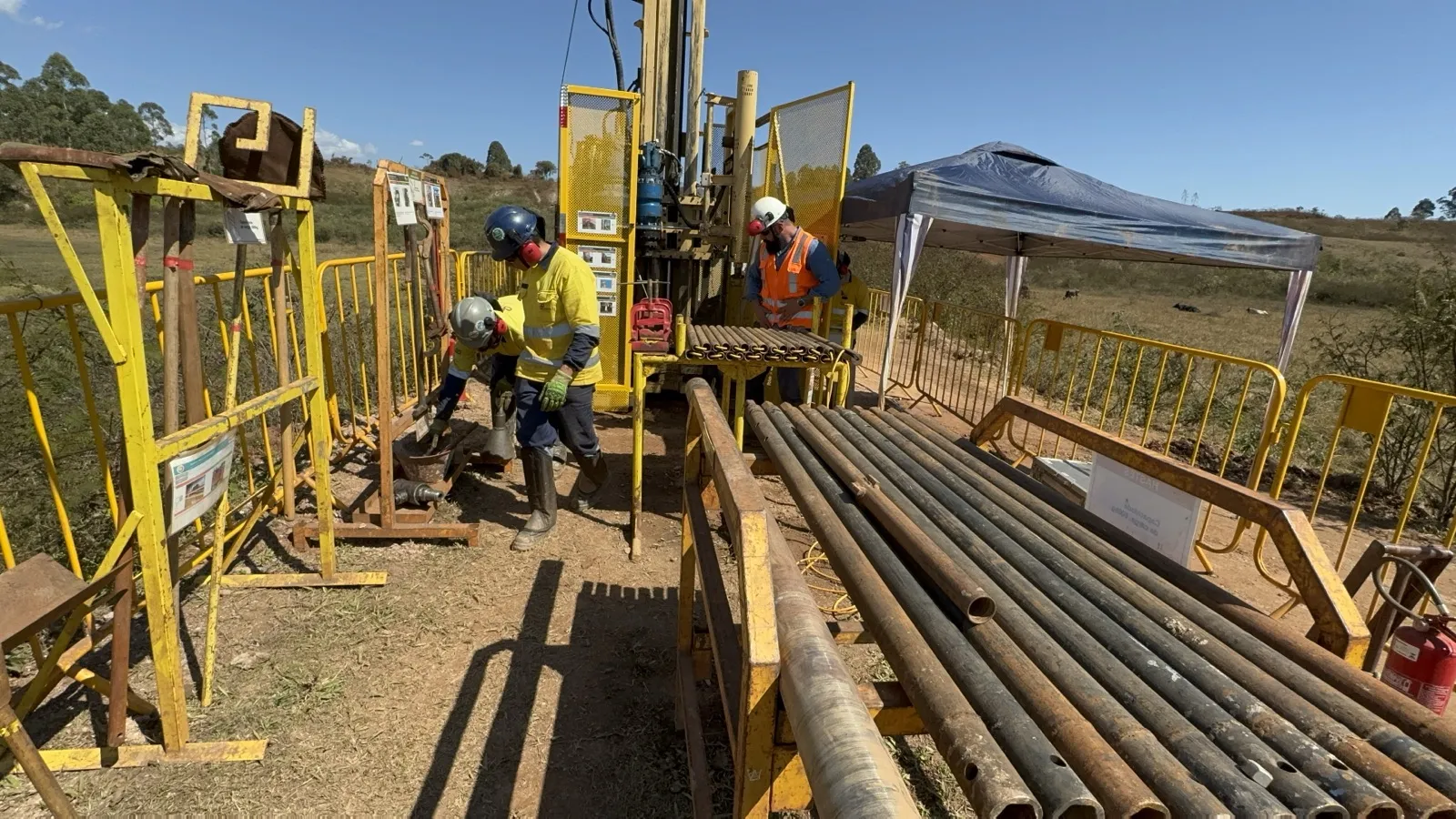
Until then, the client handled this scenario with two rigs: a penetrometer unit for the CPTu and a rotary rig to drill out the impenetrable layers. The arrangement put more people on the work pad, more exposed, and meant higher cost.
With the multipurpose rig, the drill-out is done by the rig itself, which also collects samples in those layers. The test, the drill-out and the sampling are concentrated in a single machine and a single borehole.
The gain is twofold. Fewer people on the pad means less exposure to the typical hazards of a mining structure: heavy equipment traffic, lifting operations and the handling of rods and casing. And a single mobilization means a direct cost reduction for the client: less transport, fewer crew and equipment days, and a shorter schedule, without the waiting and repositioning between two machines.
3. The operating cycle: push, drill and resume
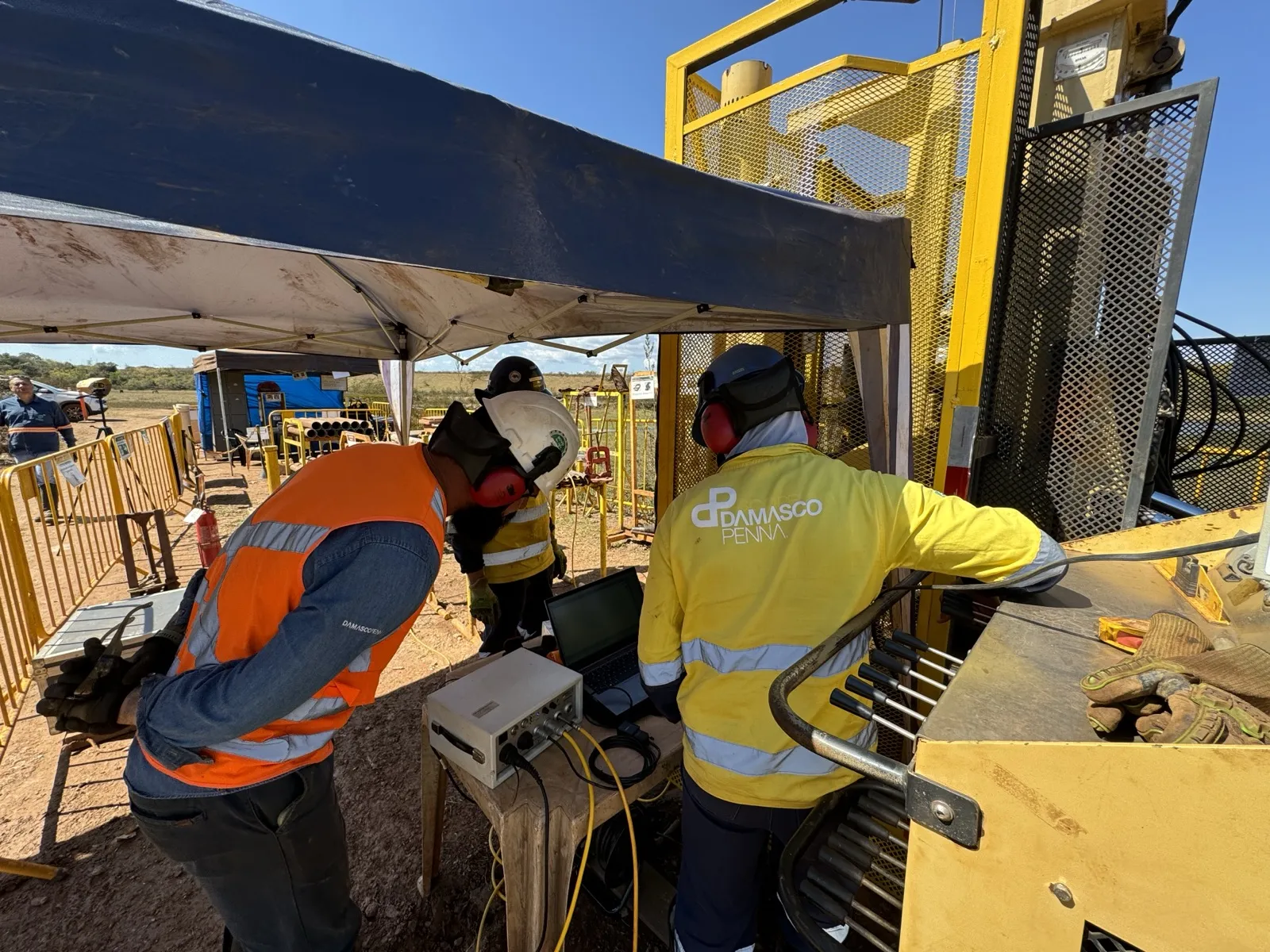
The multipurpose rig combines in the same machine the static push of the piezocone, rotary drilling and sampling. Anchored to the ground, it takes its pushing reaction from the anchors themselves, without relying on ballast. The cone advances at 20 mm/s, the rate standardized in the test norms. When it meets impenetrable material, the crew retrieves the cone, drills and cases the obstructed stretch with the same rig and resumes the push from the bottom of the casing. The cycle repeats at each new obstruction, down to the design depth.
The cycle is captured on video, with the multipurpose rig performing the test in the field (in Portuguese):

4. Complete borehole stratigraphy
There is an additional gain: the soil tested by CPTu is also cored, meaning the advance through the layers is accompanied by core barrel sampling. In the impenetrable stretches, drilling can recover core from the material the cone cannot cross; in the layers already tested, the same rig samples with core barrels or dedicated samplers.
The borehole then delivers a continuous log of the ground: digital piezocone data in the pushed stretches and physical core in the others, with tactile-visual classification, grain size and moisture content that validate the interpreted profile and support back-analyses. It is the complete stratigraphy of the vertical.
5. Care with the cone tip and saturation
The operation demands attention. Alternating between drill-out and piezocone pushing in the same borehole requires an attentive, experienced operator, so the cone tip is not damaged in the transition between layers. It is this care that preserves test quality along the entire vertical.
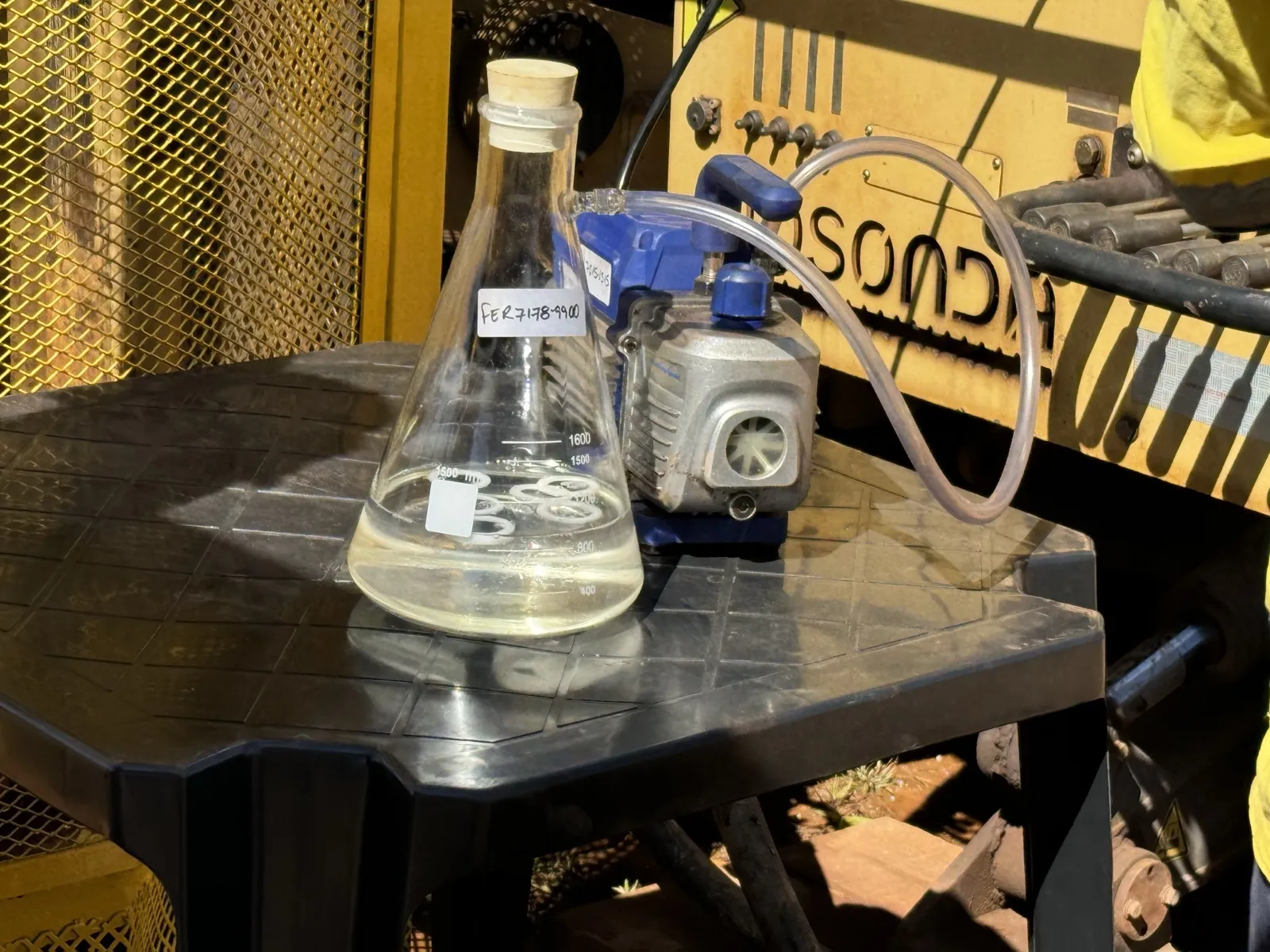
The reliability of the pore pressure reading depends on the saturation of the cone's porous element, done in the field with de-aired glycerin under vacuum before each test. In boreholes with drill-out windows the care is doubled: at each resumption, the crew checks the saturation and the cone's baseline readings before pushing again.
6. What the piezocone delivers in the soft layers
The layers of fine tailings and soft soil between the resistant horizons are exactly the ones that govern the behavior of the structure. In them, the piezocone provides:
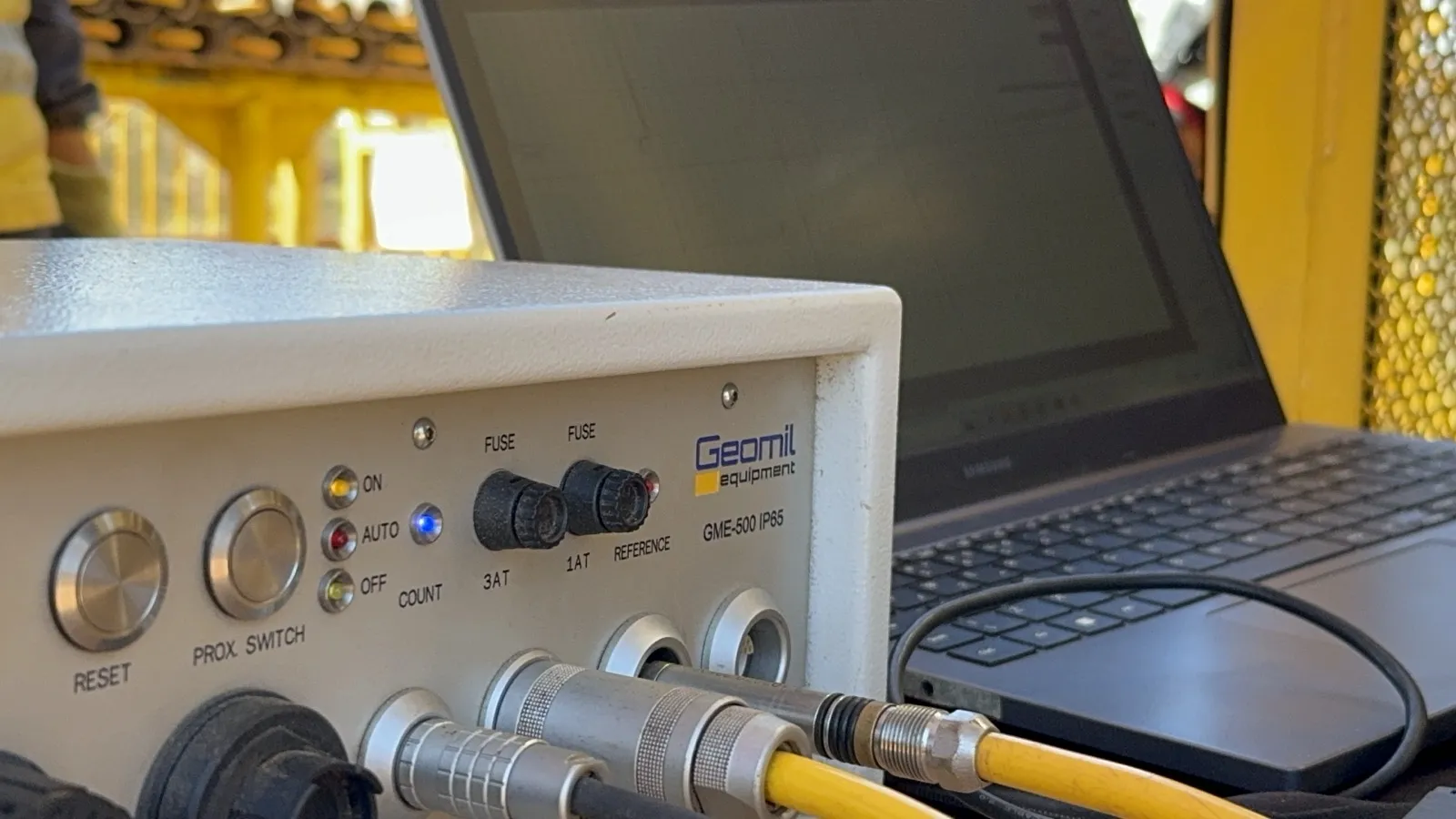
- Continuous stratigraphy every 1 or 2 cm: tip resistance (qt), sleeve friction (fs) and pore pressure (u2), the basis of soil behavior type (SBT) classification;
- Undrained strength and state of the material, distinguishing contractive from dilative behavior, direct input to liquefaction susceptibility analyses;
- Dissipation tests, which measure the pore pressure regime and the consolidation coefficient of the layers of interest;
- Shear wave velocity (Vs) from the seismic module of the SCPTu, from which the small-strain stiffness modulus (G0) is obtained.
7. Real case: SCPTu with drill out
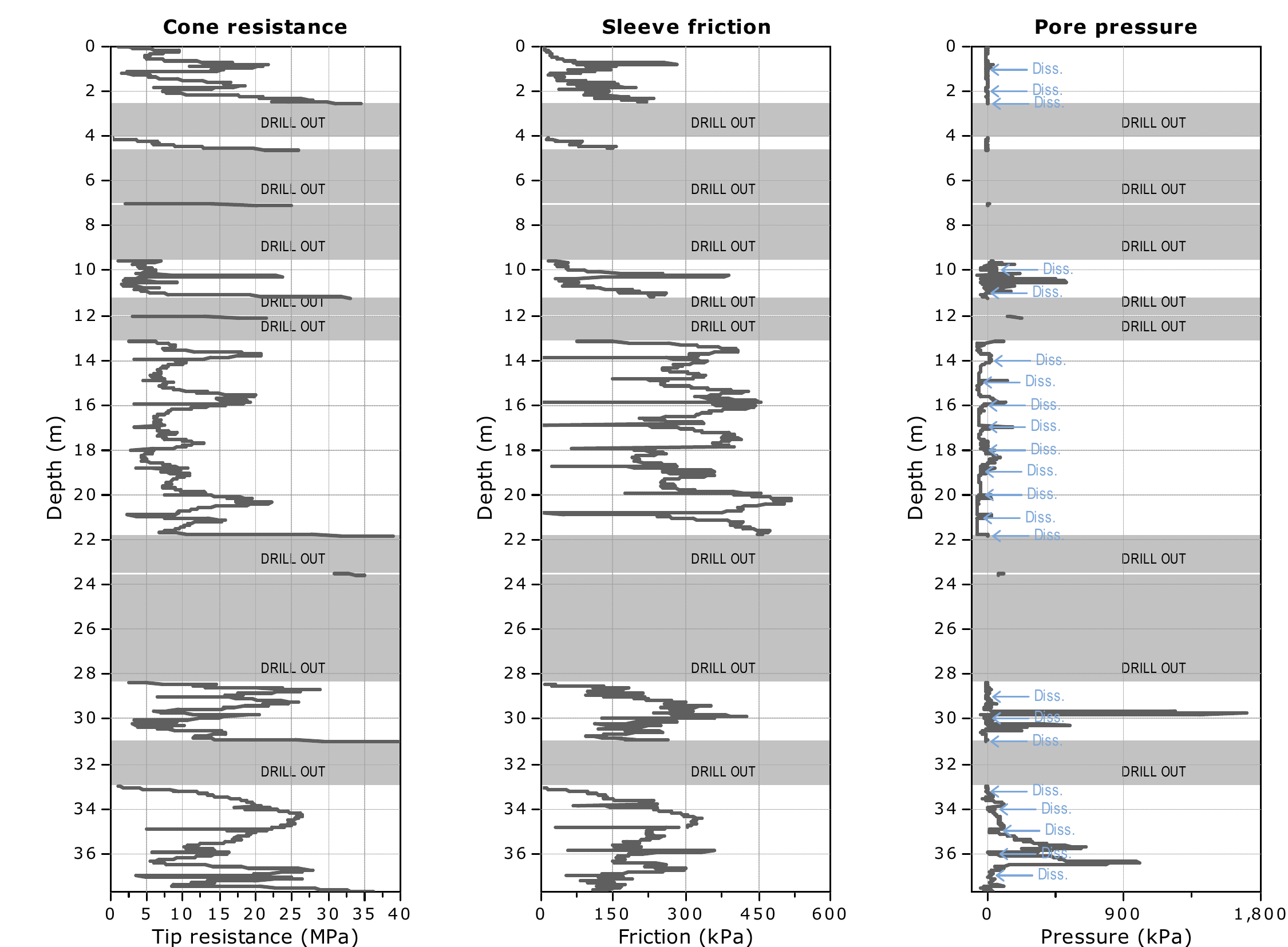
The profile below is from a seismic piezocone performed by Damasco Penna on a waste rock and tailings pile, in October 2025. The DRILL OUT bands mark the eight windows where the push was interrupted by impenetrable material and the stretch was drilled and cased by the rig itself. Between them, the cone recorded tip resistance, sleeve friction and pore pressure continuously, including the thick clay-like layer between 13 and 22 m, also characterized with more than twenty dissipation tests along the borehole.
8. Gains over the conventional arrangement
In the conventional arrangement, an obstructed borehole requires a support drill rig in addition to the pushing equipment: two machines, two crews and pad transfers at each obstruction. With the multipurpose rig, the whole cycle happens on the same machine.
| Aspect | Conventional arrangement (two machines) | Combined drilling (multipurpose rig) |
|---|---|---|
| Mobilization | Pushing equipment plus a support drill rig, with separate transport. | A single machine performs pushing, drilling and sampling. |
| People in the field | Two crews on site, with greater exposure on a mining structure. | One crew, fewer people exposed and a leaner work pad. |
| Schedule | Waiting and repositioning of machines at each obstruction. | Transition between pushing and drilling in minutes, in the same borehole. |
| Depth | Test frequently ended at the first resistant horizon. | Complete profile down to the design depth. |
| Sampling | Depends on the support rig and a new pad. | Core barrel and samplers in the same campaign, in the same borehole. |
| Cost to the client | Two mobilizations, more crew days and more transport. | Direct reduction of mobilization, crew days and schedule. |
9. Conclusion
Combined drilling with a multipurpose rig transforms the CPTu on obstructed ground: the test no longer stops at the first block and delivers the complete profile of the structure, with pore pressures, dissipations and shear wave velocity in the soft layers and physical core in the impenetrable stretches. In the case presented, the seismic piezocone crossed eight drill-out windows and reached the design depth, in a single mobilization. For the client, that means a faster campaign, fewer people exposed in the field, lower cost and a technically more defensible geotechnical characterization.