
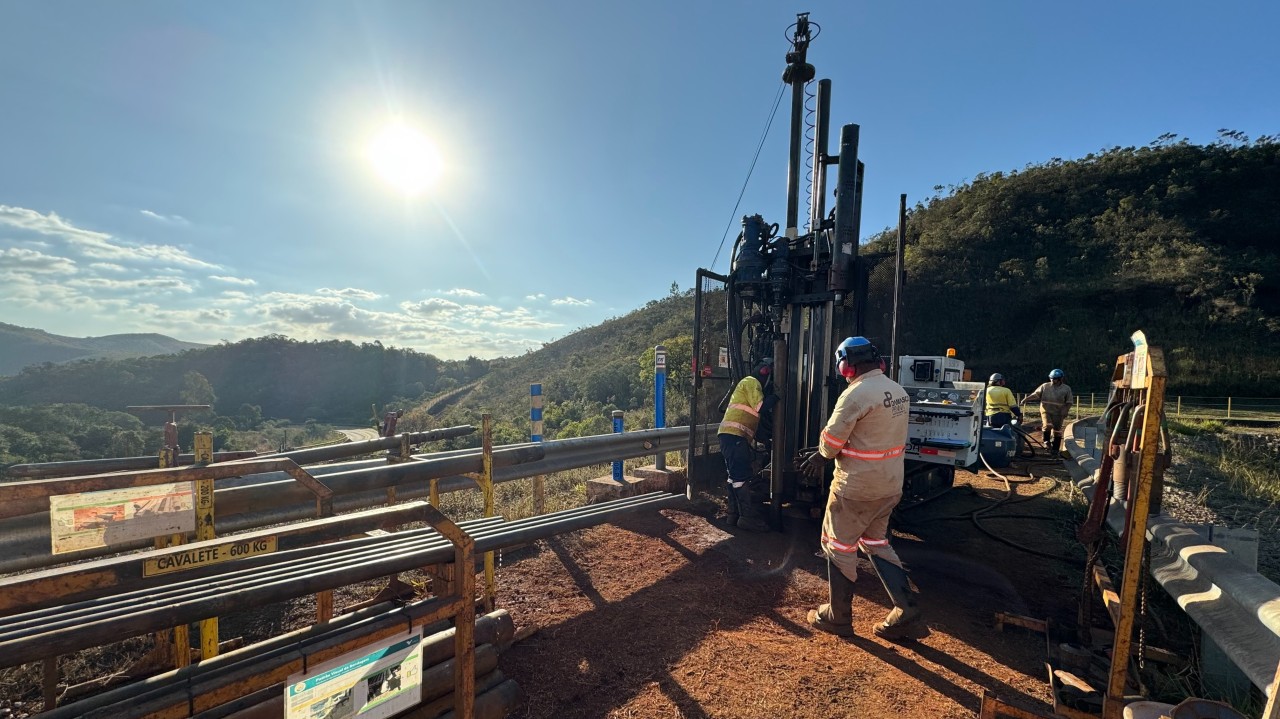
We recently attended PDAC 2025, one of the most important global events in the mining sector, which brings together specialists and companies to discuss innovation, challenges and best practices.
At this edition, we had the opportunity to take part in the course “Know Your Risks: Leadership in Exploration Health and Safety”. The content was wide-ranging, covering risk management, accident investigation, building a safety culture and other topics.
In this article, I share some insights from that course, focusing on the discussions about the mental health of workers in drilling activities and how we have been addressing this issue here at Damasco Penna Engenharia Geotécnica.
Drilling and boring: high-risk activities
One of the points discussed in the course was the high accident rate at drilling and boring operational sites, high when compared to other areas of mining.
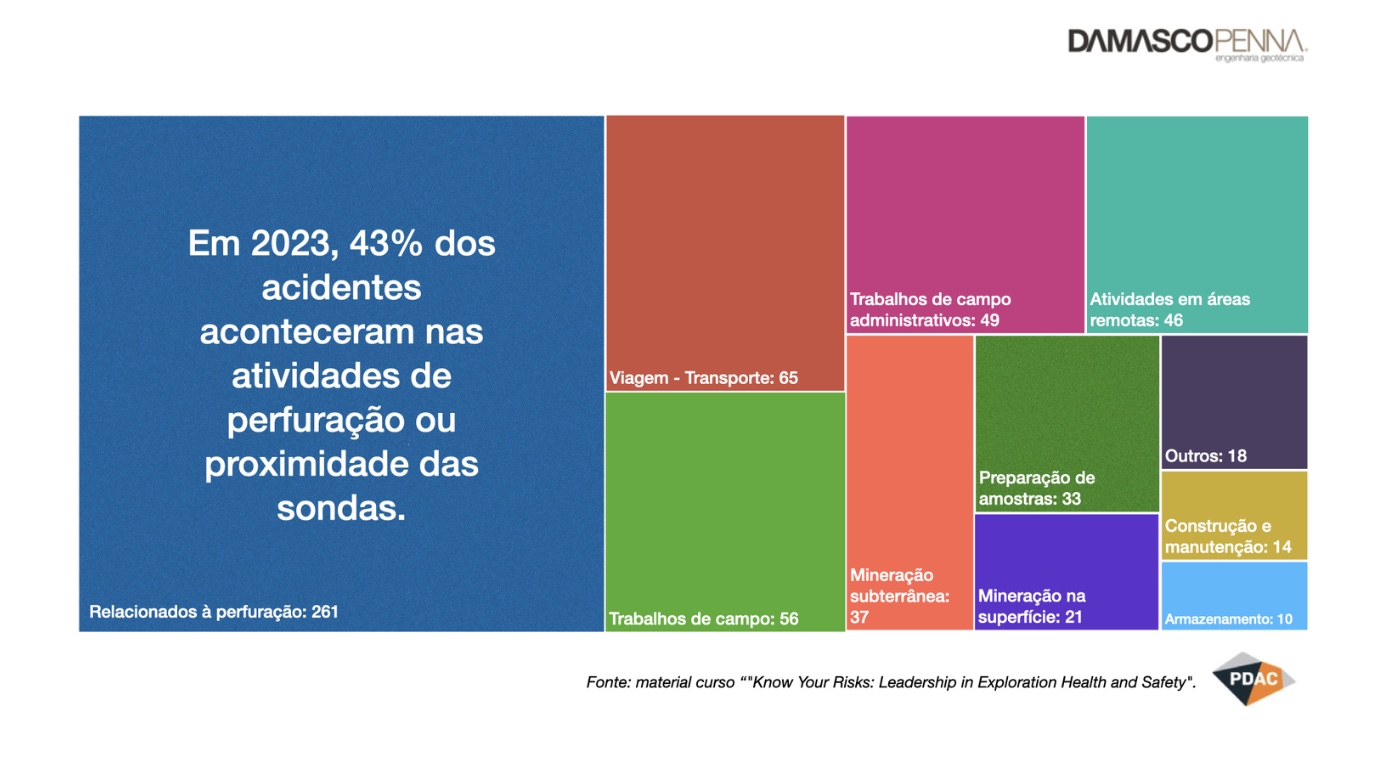
These are dynamic activities, often carried out in remote locations, using heavy equipment, moving parts and adverse conditions. According to PDAC data, in Canada it is estimated that in 2023 43% of accidents in mining areas occurred in drilling activities or those related to boring.
We know that ensuring physical safety is a constant challenge, but the discussion went beyond the obvious: how do psychological factors directly impact the safety and well-being of workers?
Mental health in mining
It caught our attention that about half of the course, which lasted eight hours, was dedicated to the discussion of psychological well-being in the operational environment. From what was presented to us, the topic is still relatively new there, but it has been gaining more and more relevance in Canada and the USA.
According to data shared at PDAC 2025:
- 10% of workers in the mining sector have already considered suicide;
- 1 in 10 tested positive for post-traumatic stress disorder (PTSD);
- the suicide rate in mining is more than double the average in the USA.
In Brazil, this movement is also starting to gain traction. Starting in May 2025, regulatory standard NR-01 requires companies to manage psychosocial risks. However, complying with protocols will be only the first step. For us, the big question today is: how can we actually transform the working environment in drilling to promote the mental health of our staff?
The mental health continuum
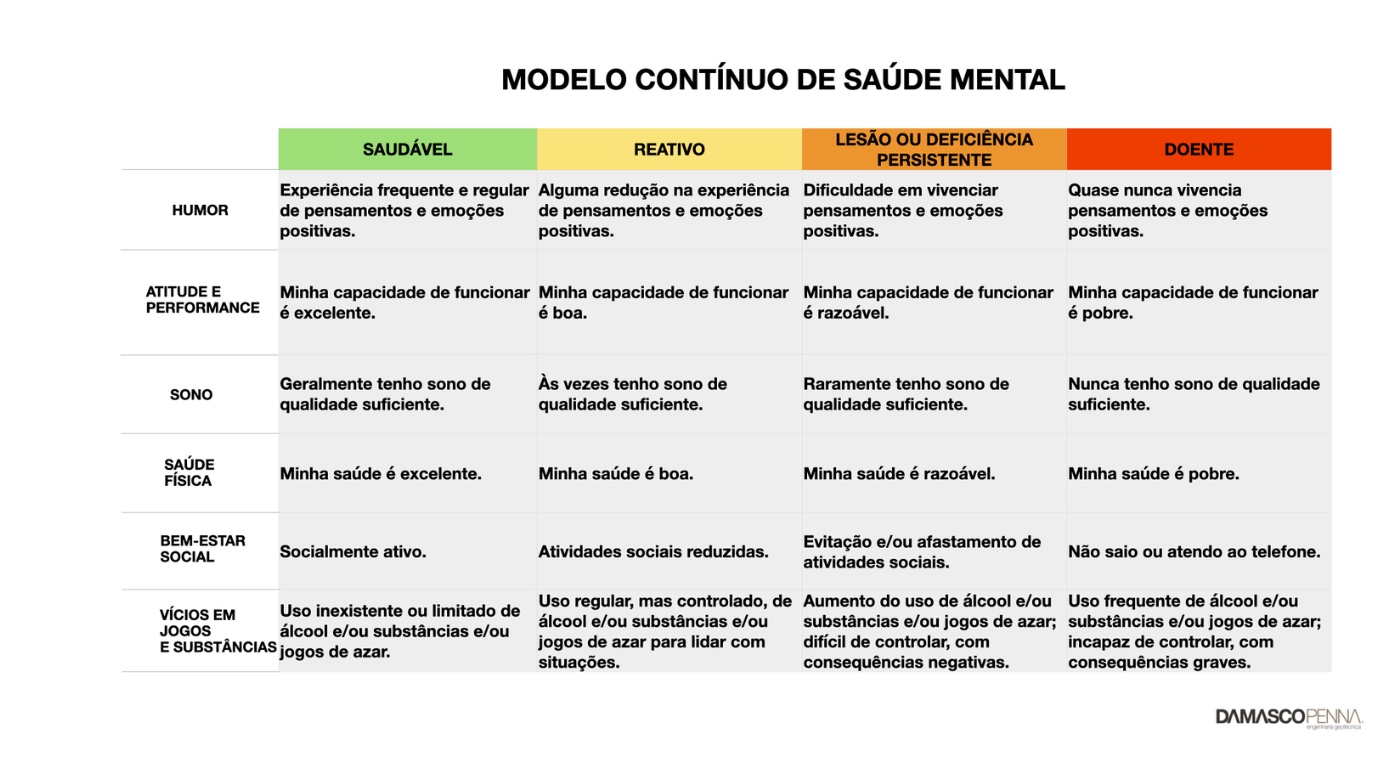
One concept presented at PDAC 2025 that we found especially interesting was the “mental health continuum model”.
Developed in partnership with the United States Marine Corps, this system aims to make it easier to recognise early signs of psychological distress, allowing preventive strategies to be adopted before the situation worsens.
In addition, the model emphasises a fundamental point: “recovery is always possible”. It proposes that, with the right support, it is feasible to restore well-being and performance in several areas, such as mood, sleep, physical health, social life and reduction of risk behaviours.
This concept reinforces the importance of looking at mental health not as a fixed state, but as a dynamic process that can be monitored and improved over time.
We believe this model can be an excellent starting point for monitoring the emotional balance of our crews.
The taboo of male vulnerability
Drilling is a predominantly male environment and, as in other areas of civil construction, it still carries a veiled taboo about expressing vulnerabilities or emotional problems. This stigma often prevents workers from seeking support, directly impacting their mental health and safety at work.
We believe the great challenge here is to humanise conversations and to have leaders who are trained and able to deal, with empathy, with the nuances of mood and mental health that our staff may present.
We have invested in awareness training, encouraging a culture where asking for help is seen as a sign of responsibility, not weakness. We have also expanded our support channels, of which there are now two:
- A communication and reporting channel, which encourages reports about harassment and bullying;
- A dedicated channel for health, including emotional health, where staff can seek professional support in a simple and quick way.
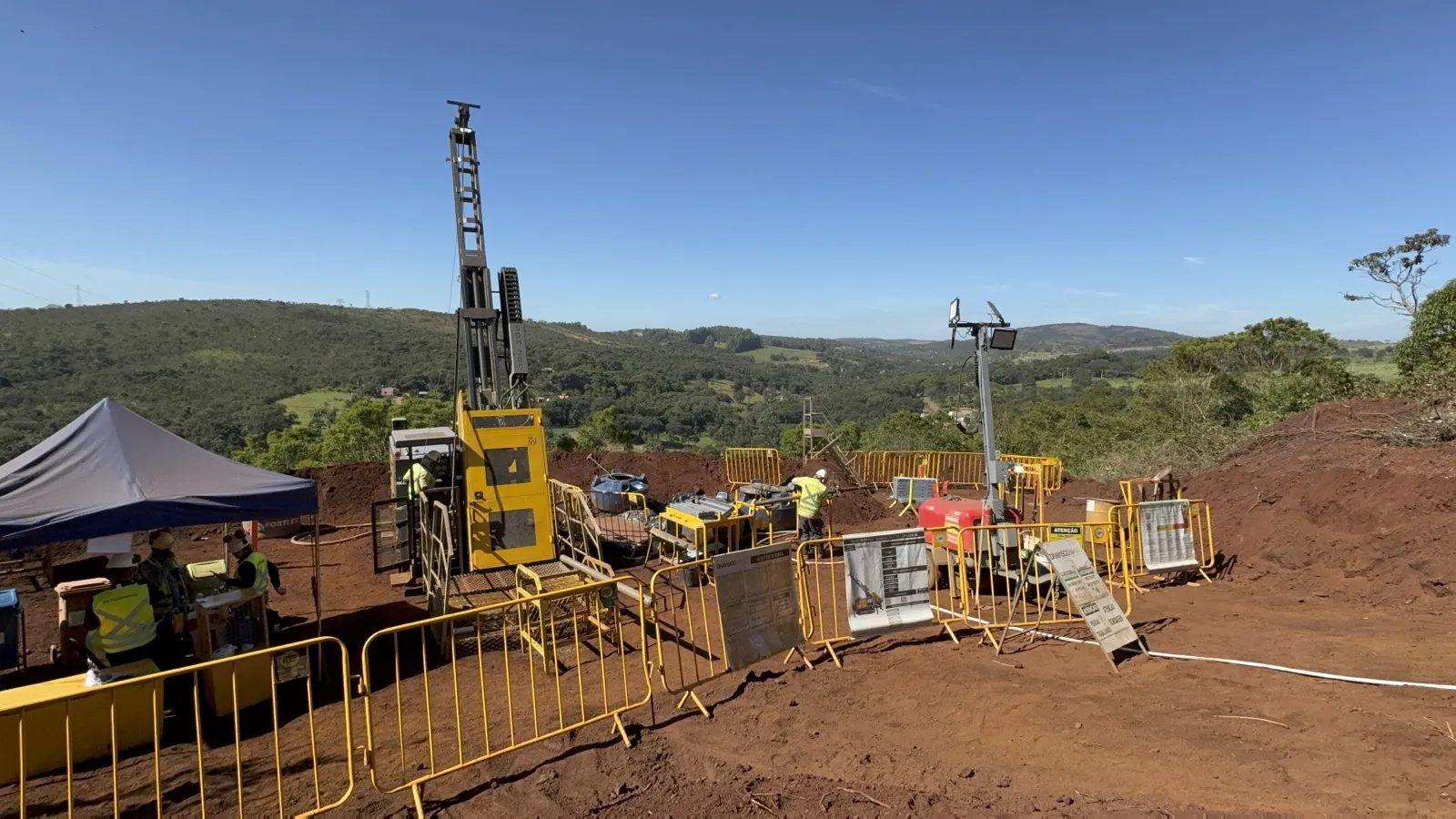
Progress in drilling
Psychosocial risks in the workplace then come to be treated with the same seriousness as other occupational risks, such as falls, electric shocks, exposure to chemical agents and crushing. Just as we adopt rigorous protocols to prevent and respond to these hazards and risks, we need a team prepared to respond promptly to the challenges of mental health.
In practice, we believe this means identifying early signs of distress, creating an environment where workers feel safe to seek help, and structuring effective support measures. The prevention and management of psychosocial risks are not just a regulatory requirement, but an essential commitment to ensuring a healthier, safer and more productive workplace for everyone.
For a sector where a few decades ago it was normal for drillers to have their hands mutilated in work accidents, it is very good to see how quickly we are evolving. The road is still long, but we already know the direction to take.
- Know Your Risks: Leadership in Exploration Health and Safety · PDAC 2025.
- The Mental Health Continuum Model (MHCM) · Government of Canada.
- NR-01 · Management of psychosocial risks · Brazil, 2025.