
1. A spread almost no other service has
Ask three contractors to quote SPT drilling for the same site and the proposals may come back with prices per meter that are very far apart. That is a spread of more than ten times between the lowest and the highest price, something rare in construction: ready-mix concrete, steel or formwork rental vary by a few percentage points between serious suppliers.
The explanation is not that someone is necessarily wrong. It is that the drilled meter, in practice, is not a standardized product. Brazilian standard NBR 6484 defines the test procedure, but what each company delivers under the same name varies in equipment, crew, quality control and technical responsibility. R$ 80 and R$ 1,000 buy different services that answer to the same name.
2. Where the spread comes from
Four factors explain practically all of the difference between one proposal and another:
| Factor | How it weighs on the price per meter |
|---|---|
| Method: manual or mechanized | The manual tripod ties up little capital and reaches where machines cannot; the mechanized rig produces more and standardizes the driving energy, but costs more per hour. Each method has its price range and its place. |
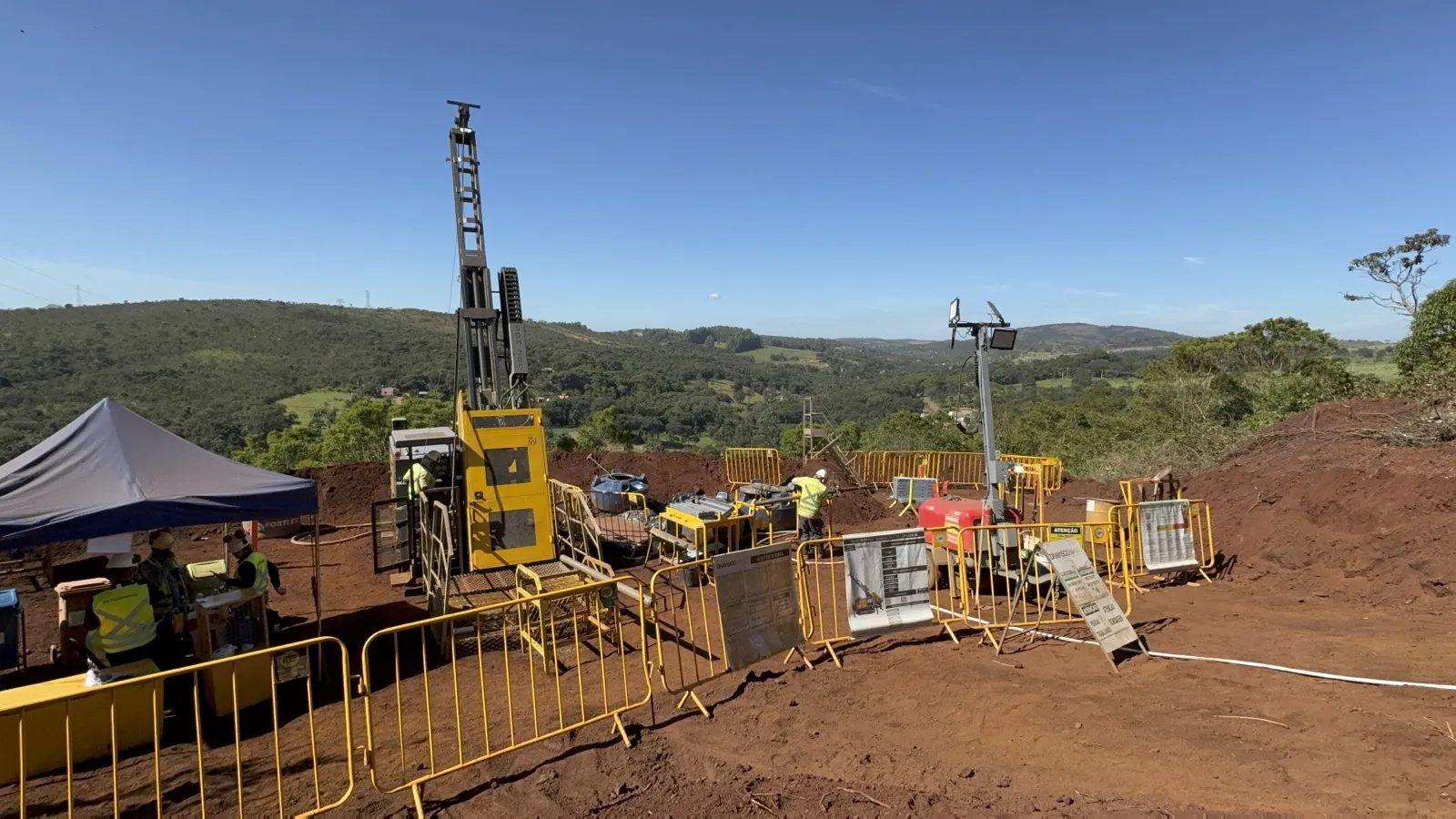
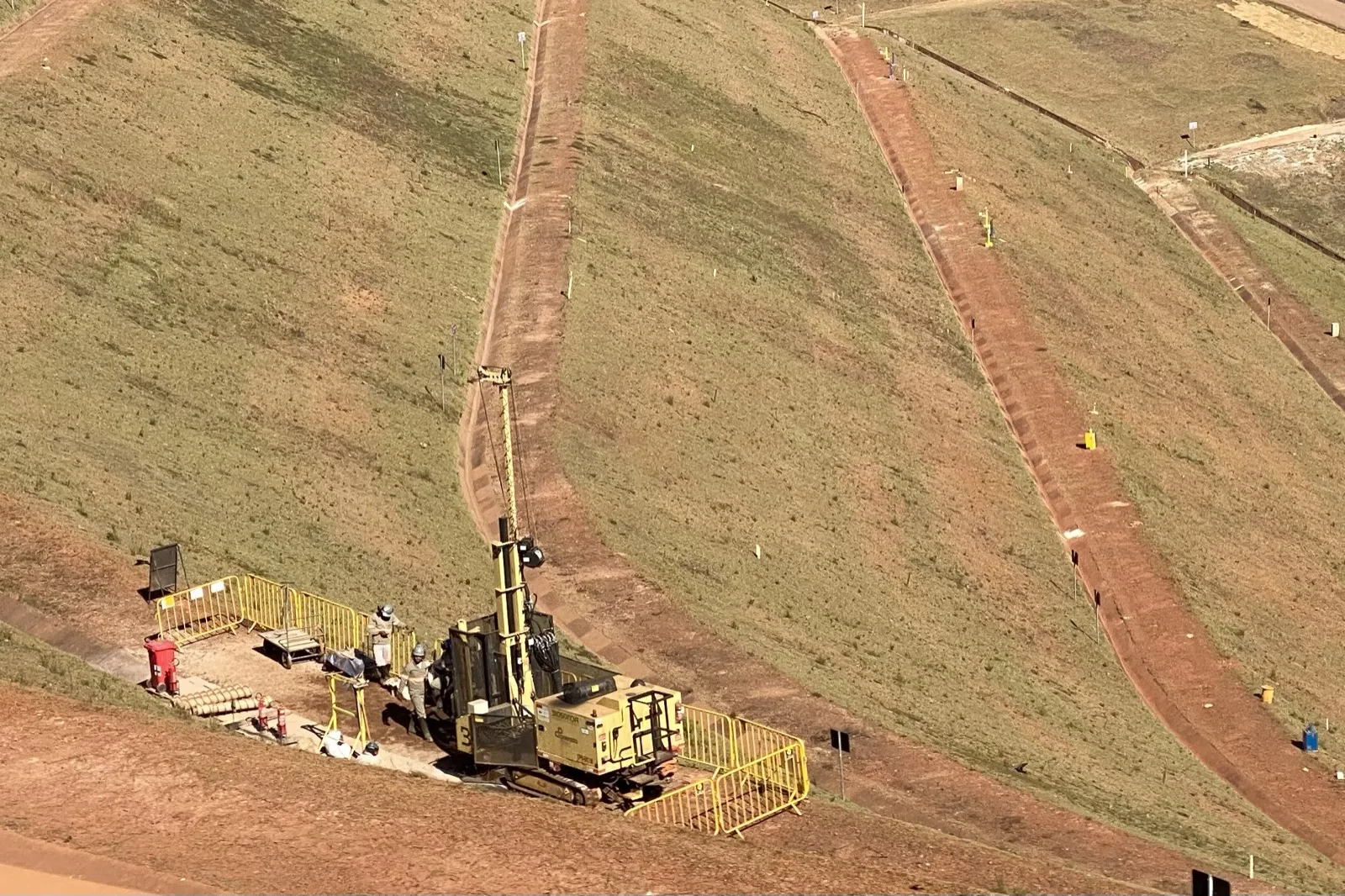
| Access and mobilization | A borehole next to the street is one thing; a slope, a flooded area or dense vegetation demand barges, winches or access opening. Part of the cost exists before the first meter is drilled. |
| Client requirements | An unsupervised job accepts any log; mining companies and large clients audit hammer energy, calibration, safety, insurance and ISO certification. Meeting that standard costs money, and it shows in the meter. |
| Company structure | A registered, trained crew, a responsible engineer, PPE, a fleet and a laboratory carry fixed costs the meter has to pay for. An informal crew carries none of that, and the price shows it. |
3. What the low price usually leaves out
The difference between the ends of the range is rarely visible in the proposal. It sits in what supports the number that goes into the design:
- Tooling within standard dimensions. A sampler, rods and hammer out of specification change the result without the log giving it away.
- A trained, registered crew. Training, payroll obligations and occupational safety are part of the service, not an extra.
- Engineering supervision. Reviewed logs, an individual profile for each borehole and a responsible engineer signing off.
NBR 6484 fixes the sampler dimensions, the hammer mass and drop height and the blow count procedure. What separates the price ranges is fidelity to those requirements and the ability to prove it. An N value measured without that control enters the foundation design with the same weight as a reliable one, and it is the design that pays the difference.
4. The ICE Manual yardstick: about 1% of the works
The question that follows the price per meter is how much a whole campaign should cost against the project budget. The classic reference is the ICE Manual of Geotechnical Engineering, edited by John Burland, the Imperial College London professor known for the stabilization of the Tower of Pisa, with Tim Chapman, Hilary Skinner and Michael Brown (ICE Publishing, 2012). The manual places the cost of a well sized investigation between 0.1% and 0.2% of construction cost on ordinary projects, rising to 0.5% to 1.0% on small works, where mobilization dilutes less, and staying around 0.1% to 0.15% on large infrastructure.
The same manual reproduces the classic survey by Rowe (1972), which measured how much different types of works spend on investigation relative to capital cost:
| Type of works | Investigation cost (% of capital cost) |
|---|---|
| Earth dams | 0.89% to 3.30% |
| Railways | 0.60% to 2.00% |
| Roads | 0.20% to 1.55% |
| Buildings | 0.05% to 0.22% |
| Overall mean | 0.70% |
The correct reading of these numbers is not to chase a fixed percentage, but to recognize that the investigation effort must be proportional to the risk the ground imposes on the works. A dam demands a far more intense campaign than a warehouse of the same value, because the consequence of getting the ground wrong is incomparably larger. The historical mean, close to 0.7% of capital cost, serves as an order of magnitude, not a target.
5. The cost of not investigating
A saying long established in the British site investigation literature sums it up: you pay for a site investigation whether you have one or not. Whoever skips the investigation does not stop paying; the cost simply moves to the end of the job, as rework, redesign and contractual dispute. The ICE Manual points to unforeseen ground conditions as the largest single source of delay and cost overrun in construction.
The diagram below contrasts the two cost paths. With adequate investigation, the ground is known before design and the cost stays predictable. Without enough investigation, each surprise pushes the cost up in steps, with the works already under way, at the most expensive moment to change anything.
The essential point is timing. A soft soil layer detected during investigation changes a foundation design on paper, at low cost. The same layer discovered with the pile already driven demands reinforcement, redesign and standstill. The ground is the same; what changed is the moment the problem appeared, and that moment is what sets the price.
6. How to compare proposals
- Size by risk, not by the cheapest meter. Two projects of the same value can demand very different campaigns; what rules is how sensitive the works are to the ground.
- Compare scope, not just price. Mobilization, casing, energy measurement, reports with individual borehole profiles, professional liability and schedule change the service completely. Proposals are only comparable when they deliver the same thing.
- Put the difference at the scale of the works. The distance between the cheapest and the most complete proposal of a typical campaign is usually irrelevant against the total budget. The reliability that difference buys is not.
7. Frequently asked questions about drilling cost
How much does an SPT boring cost?
In Brazil, the price per metre of SPT boring typically ranges from R$ 80 to R$ 1,000, depending on the depth of the borings, the number of points, the type of ground, site access and the region. There is no price list: the value of each campaign is sized to the project, following the boring plan of NBR 8036.
Why do boring prices vary so much?
Because each project requires a different investigation. Shallow borings in soft soil with easy access sit at the bottom of the range; deep borings, in rock or at a remote site, at the top. Depth, the number of borings and logistics are the factors that weigh most on the price per metre.
Is it worth saving on the boring?
Rarely. Site investigation usually costs less than 1% of the project value, but it defines the foundation design. Saving on the boring tends to cost more later, in an oversized foundation or in settlement and cracking problems whose repair exceeds the cost of the entire campaign. Cheap on the boring usually makes the project more expensive.
How many borings does a project need?
NBR 8036 guides the number and layout of borings according to the built area and the type of project. As a reference, a minimum number of borings per area is required, with a defined spacing. The exact plan is sized by the engineering team from the project design.
8. Conclusion
The drilled meter ranges from R$ 80 to R$ 1,000 in Brazil because different services answer to the same name: different methods, access conditions, requirements and structures behind each crew. The right yardstick is not the lowest price per meter, but the cost of the campaign against the risk of the works: on the order of 1% of the budget, by the reference of the ICE Manual and the historical series of Rowe. Skipping the investigation does not eliminate that cost; it moves it into execution, multiplied, as unforeseen conditions. Between paying a small, known amount at the start or a large, unpredictable one at the end, engineering has long given its answer.
- Burland, J.; Chapman, T.; Skinner, H.; Brown, M. (eds.). ICE Manual of Geotechnical Engineering, Volume I, Section 4: Site investigation. ICE Publishing, London, 2012.
- Rowe, P. W. The relevance of soil fabric to site investigation practice. 12th Rankine Lecture, Géotechnique, 1972. Percentages reproduced in the ICE Manual.
- ABNT NBR 6484 (SPT drilling) and NBR 8036 (borehole programs for buildings), the Brazilian standards.
Site investigation for your project
Tell us about the project and we will size the investigation plan and the quote.