How big is a clay grain? The episode shows why the answer does not fit in your eyes, presents the frontier between the world of gravity and the world of electrochemistry, and explains why sand and clay behave like materials from different planets.
Prefer reading? The full transcript is just below. The timestamps jump to the exact moment in the video. Narration and subtitles in English.
In three points
The scale of grains does not fit in your eyes. From gravel to clay, the gap tops ten thousand times.
Below the finest sieve, gravity loses command. Electrochemical forces rule the fine grains.
Size, shape and mineral define behaviour. That is why sand and clay act like materials from different planets.
Narrated transcript
The episode in text
Full text of the episode narration. Click a timestamp to watch that passage.
The question that looks like a detail
How big is a clay grain? The answer sounds like a laboratory detail. It is not: it is the variable that decides whether a ground is firm or treacherous. And it is so extreme that your eyes cannot follow it. This episode is about the invisible scale of soils.
From gravel to clay: ten thousand times
A coarse sand grain reaches two millimetres. If it gets into your shoe, it hurts. A clay grain is one thousand times smaller than that. And from gravel to clay, the distance tops ten thousand times.
The ping-pong ball and the building
Our brain does not process those numbers. Try it. A ping-pong ball next to a fridge: one hundred times of difference. You can see both at once. Now put the ball next to a building. To see the whole building, you step back. And the ball disappears. We are good at double, triple, ten times.
If clay were a ping-pong ball
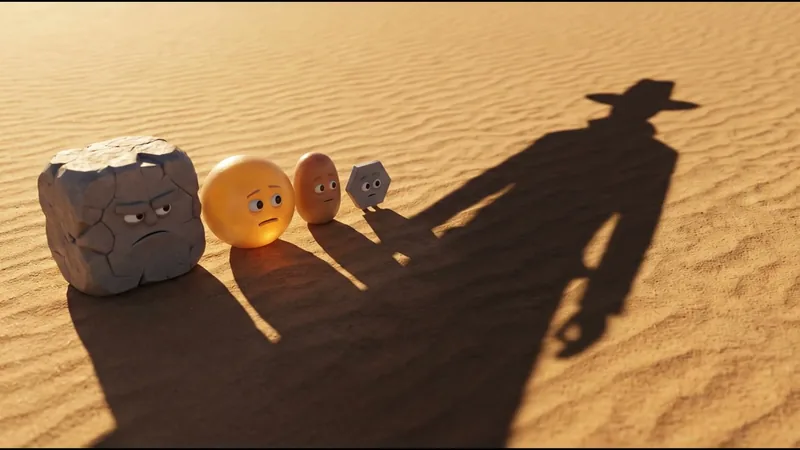
Ten thousand does not fit in the eyes. Want to feel it? If the clay grain were that ping-pong ball, the coarse sand grain would be a twenty-metre building. And the gravel, a two-hundred-metre tower. That is why the characters of this series never appear at real scale. There would be no screen to see them all.
The chalk dust that ignores gravity
And there is an even stranger consequence: below a certain size, the grain simply stops obeying gravity. Run your finger along a chalk stick and turn your hand down. The dust does not fall. Gravity is right there, whole, available. And the dust ignores it. Because for gravity to rule, you need mass. And a grain the size of chalk dust has almost none.
The orange that took too many cuts
What it has in excess is surface. Think of an orange. Cut it in half: the mass of each piece dropped by half, but two new surfaces were born that did not exist. Cut again. Mass drops again, and more surface is born. Cut twenty times. The little piece left weighs almost nothing and is practically all surface.
The clay grain is exactly that: an orange that took too many cuts. Except the cuts were made by nature, over millions of years of weathering.
Two worlds, two physics
With plenty of surface and almost no mass, gravity no longer rules it. Electrochemical forces do: attraction between charges on the grain surface, water films, bonds between neighbours. This is the most important frontier in soil mechanics. Coarse grains live in the world of gravity. Fines live in the world of electrochemistry. Two worlds, two physics, two behaviours.
Shape counts too
And size is not the only surprise. Shape too. The sand grain is almost a little ball: it rolls, slides, bears. Clay is a platelet: two large dimensions and almost no thickness. And there are organic soils with fibre-shaped grains, true spaghetti. Shape also tells the biography: sand that travelled far arrives rounded and polished from all the rolling; young sand still has sharp edges.
Recap and the villain to come
Size, shape and mineral: the three together define behaviour. Recapping the episode: the scale of grains goes beyond what the eyes reach; below the finest sieve, electrochemistry takes command; and that is why sand and clay, daughters of the same rock, behave like materials from different planets. And what exists between the grains, in either world? The next episode introduces the villain of all soil mechanics.
Questions from the episode
What gets answered
How big is a clay grain?
A clay grain is about one thousand times smaller than a coarse sand grain, which reaches two millimetres. From gravel to clay, the size gap tops ten thousand times: a scale the eyes cannot follow.
Why doesn't chalk dust fall off your hand?
Because a grain that small has almost no mass, and gravity needs mass to rule. What it has in excess is surface, and surface forces hold the dust against gravity.
What changes between coarse and fine soils?
Coarse grains live in the world of gravity: they roll, slide and bear on each other. Fines live in the world of electrochemistry: charge attraction, water films and bonds between neighbours. Two worlds, two physics, two behaviours.
Does grain shape matter?
Yes. Sand is almost a little sphere; clay is a platelet, with two large dimensions and almost no thickness; organic soils have fibre-shaped grains. Shape also tells the biography: well-travelled sand arrives rounded, young sand still has sharp edges.
How does this scale show up in engineering practice?
In laboratory characterization: sieving separates the coarse grains and sedimentation measures the fines, drawing the grain-size distribution curve. It tells which of the two worlds the ground lives in and which tests and parameters the design requires.
From the episode to the field
Where this story becomes work
The grain-size curve is the portrait of the scale this episode tells. These are the Damasco Penna services that draw and use it.